
Strain on bones may extend lifespan
Chinese researchers published a new study showing that controlled strain on bones extended lifespan and improved cognitive abilities in mice. The research found that this mechanical stress slowed aging processes and boosted metabolic health.
In a study published in Cell Metabolism, researchers from China applied a specific loading technique to the shin bones of mice for four months. The method involved short bursts of pressure twice a week, designed to isolate mechanical strain on the bone specifically.
The data showed that maximum lifespan increased by up to 15.4 percent, while median lifespan rose by an average of 9.4 percent compared to control mice. This equates to nearly 80 extra days for the group subjected to the bone-stressing procedure.
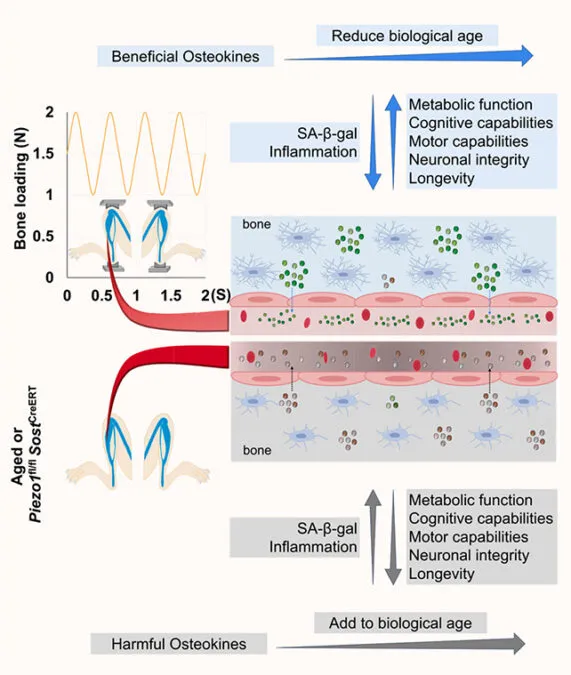
Mice undergoing this process also demonstrated significant improvements in memory and immune system performance alongside better blood sugar regulation. The researchers noted that these benefits extended far beyond simple bone strength.
Further experiments involved genetically modifying mice to remove the PIEZO1 protein, which bone cells use to sense force. Without this protein, the animals experienced accelerated aging, cognitive decline, and organ inflammation.
Analysis of blood chemistry revealed that mechanical strain triggers the release of a beneficial protein called Pigment Epithelium-Derived Factor (PEDF). This protein helps maintain cell health throughout the body and reduces wear on the immune system.
The researchers concluded that osteocytes in the bone play a vital role not just in skeletal maintenance but also in controlling bone marrow immune cell development. They suggest this mechanism explains why physical activity is linked to longevity.
Sources
Read the full story at the source
ScienceAlertsciencealert.com↗
This summary is compiled from the sources above with the help of AI. Please refer to the sources for full details.