

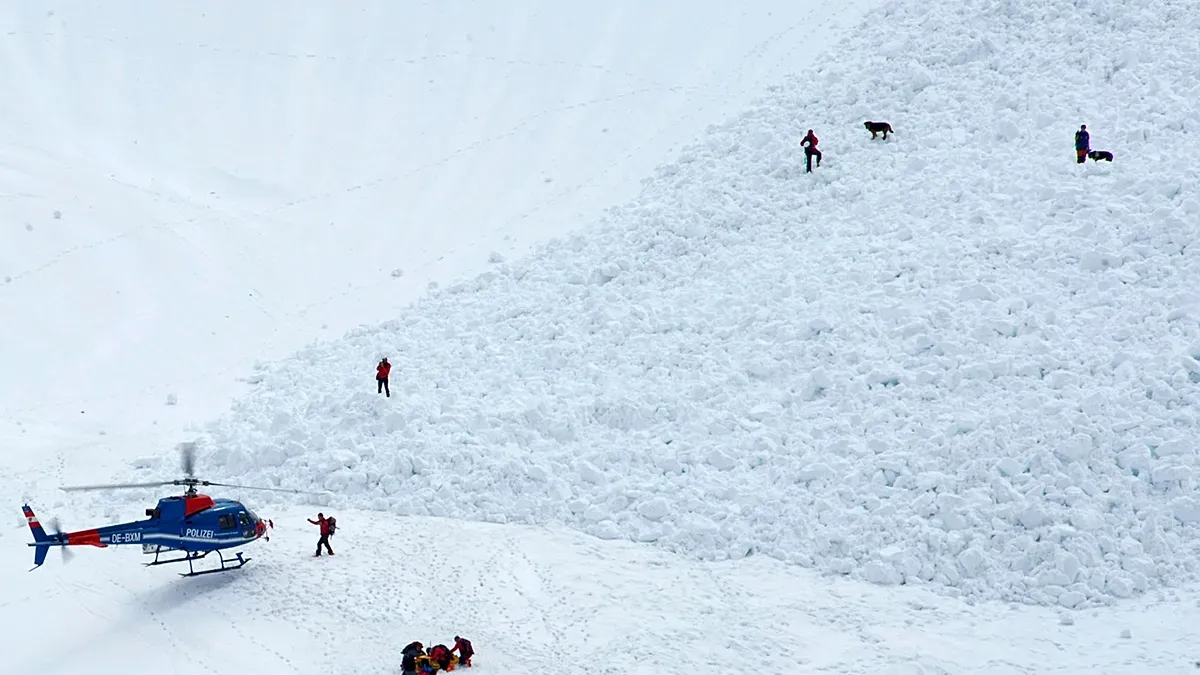
Ski and avalanche season begins in Germany
With the start of ski season on Germany's Zugspitze Mountain, avalanche danger has also begun. Local experts have warned about risks created by uneven snow layers and temperature fluctuations.
The first ski lifts on Germany's Zugspitze Mountain went into service this Friday, officially starting the ski season and avalanche danger period simultaneously.
Snow measurements show 47 centimeters at an altitude of approximately 2,700 meters on Zugspitze, while nearby Nebelhorn Mountain already has a snow depth of 67 centimeters. Current temperatures in the region are around minus 7 degrees Celsius.
Thomas Feistl, head of the Bavarian Avalanche Warning Service, emphasized that most avalanches are triggered by people themselves and highlighted the importance of prevention. Fatal incidents often occur when skiers or snowboarders venture outside marked pistes or walk on snow with boots.
The primary causes of avalanche formation include uneven layers from old snowpacks and wind-deposited drifts. Fresh snow can create weak points within existing layers, while strong winds pile up snow in specific areas forming dangerous 'wind slabs'.
Slopes between 30 to 45 degrees are particularly prone to avalanches. A large mass of snow can break loose and slide down the slope in seconds; the debris carried by an avalanche is extremely heavy.
Experts warn that people trapped under snow often cannot move or save themselves. In many cases, the force exerted on a person caught in an avalanche reaches massive levels, leaving little chance for self-rescue.
Sources
Read the full story at the source
Euronews Türkçetr.euronews.com↗
This summary is compiled from the sources above with the help of AI. Please refer to the sources for full details.