

Structure Defying Cosmic Understanding Discovered
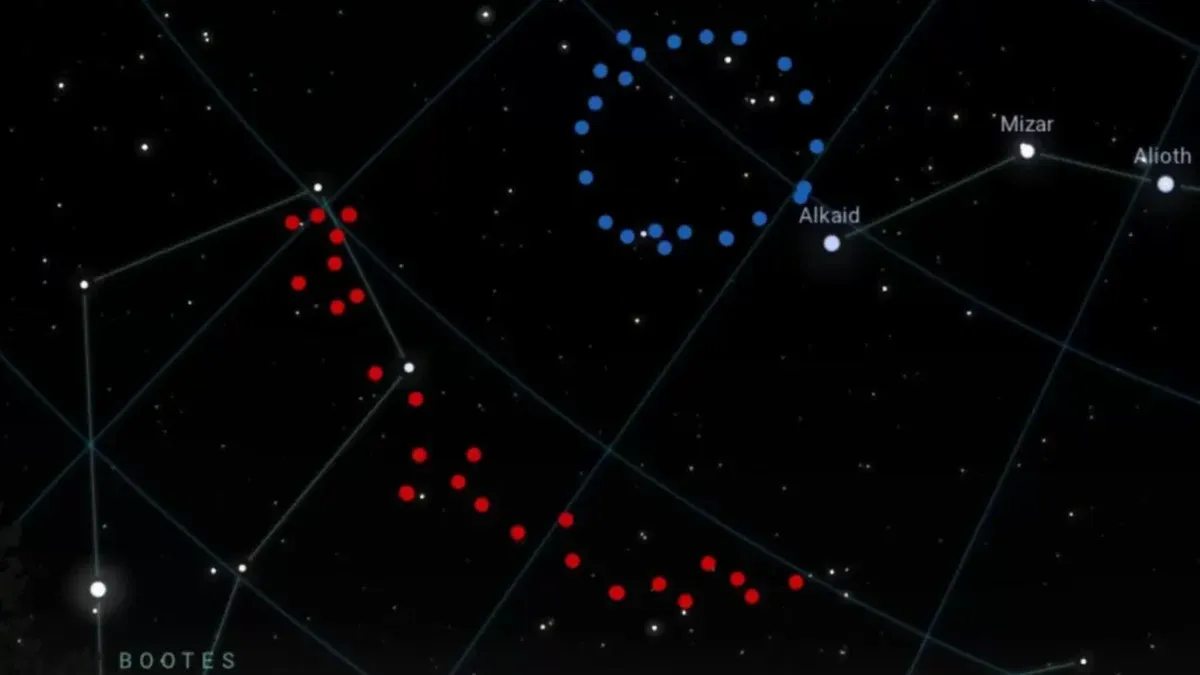
Astronomers discovered a massive galaxy ring spanning 1.3 billion light-years that challenges current models of cosmic expansion. This finding requires scientists to reconsider the standard understanding of cosmology.
In 2024, astronomers led by Alexia Lopez from the University of Central Lancashire detected a signal in light that had traveled for 6.9 billion years. The discovery was presented at the 243rd meeting of the American Astronomical Society and published in the Journal of Cosmology and Astroparticle Physics.
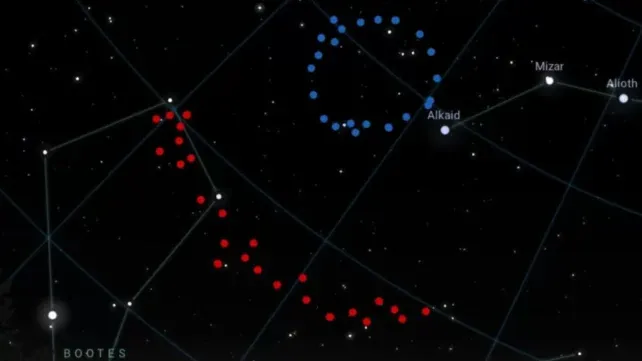
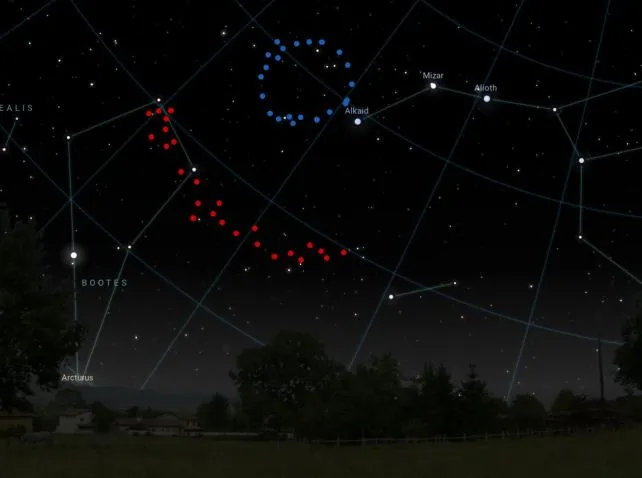
The structure, named 'The Big Ring', does not match any known formation mechanism. Lopez's earlier announcement in 2021 regarding the 'Giant Arc' located in the same part of the sky also puzzled scientists due to its unexplained nature.
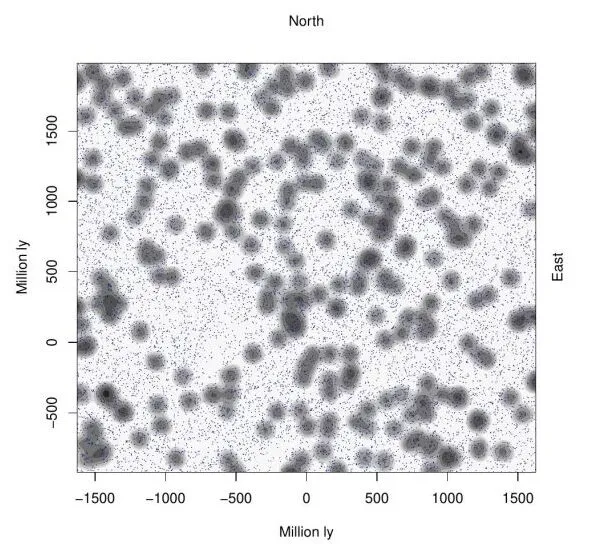
Researchers suggest these ultra-large structures might be linked to Baryon Acoustic Oscillations (BAO). However, theoretical calculations predict a size limit of around 1.2 billion light-years for cosmic structures, whereas the discovered ring exceeds this boundary significantly.
Some models propose that under Roger Penrose's conformal cyclic cosmology theory, where the universe undergoes endless Big Bang expansion cycles, ring structures are expected. Another possibility is topological defects in spacetime known as cosmic strings.
These findings may conflict with the cosmological principle stating that space should look similar in all directions on a large scale. Scientists have not yet fully explained why such massive structures exist or how they affect cosmic evolution.
Sources
Read the full story at the source
ScienceAlertsciencealert.com↗
This summary is compiled from the sources above with the help of AI. Please refer to the sources for full details.